
Food hygiene and allergen training for autumn events: Level 2, HACCP basics and fast onboarding
September brings new menus, new venues and new people. Whether you are running a school canteen, a pop-up at an autumn market, or scaling café teams for university term, food safety needs to be up to speed before the first service.
This guide shows how to onboard seasonal staff quickly, what level of food hygiene training fits which role, how allergen awareness underpins safe menus, and how to evidence it all for Environmental Health Officer (EHO) visits. You will also find a simple HACCP explainer, common mistakes to avoid and quick wins for building an autumn training pack.
Autumn term realities: new menus, new risks
Menu changes introduce new ingredients, new suppliers and different prep flows. All three can expose gaps in controls and allergen information. If you recruit temporary staff, you also inherit varied experience levels and inconsistent habits. The fix is simple, structured training with clear records, aligned to risk and role, before shifts begin.
Safeguard E-Learning provides tutor-led video modules with a free first-module trial for every course. Seasonal teams can preview format and pace, then complete the full course online at their own speed.
- Our 'Achieving Food Hygiene Rating Level 5 Online Course' for frontline staff who handle, prepare or serve ready-to-eat foods:
Achieving Food Hygiene Rating Level 5 Online Course - Safeguard E-Learning
- Our 'Supervising Food Safety Level 3' for chefs, supervisors and managers who set controls, brief teams and oversee HACCP:
Supervising Food Safety – Level 3 - Safeguard E-Learning
HACCP Courses: Introduction to Level 2 & Critical Control Points
Level 1 vs Level 2 vs Level 3: who needs what?
- Level 1 Food Hygiene suits low-risk roles with minimal food contact such as stock runners or pot-wash where no open, ready-to-eat food is handled.
- Level 2 Food Hygiene is the typical baseline for food handlers in catering, retail or events, including café teams, bar staff preparing ready-to-eat items, kitchen assistants and cooks. It covers contamination routes, temperature control, personal hygiene and cleaning.
- Supervising Food Safety Level 3 fits anyone who manages people or processes, writes procedures, signs off HACCP, or leads service across multiple sites or shifts.
Is Level 2 Food Hygiene a legal requirement? UK law requires food business operators to ensure food handlers receive instruction or training appropriate to their work. It does not name a specific certificate, but Level 2 is widely accepted evidence that the training standard is met.
Allergen training that protects guests and staff
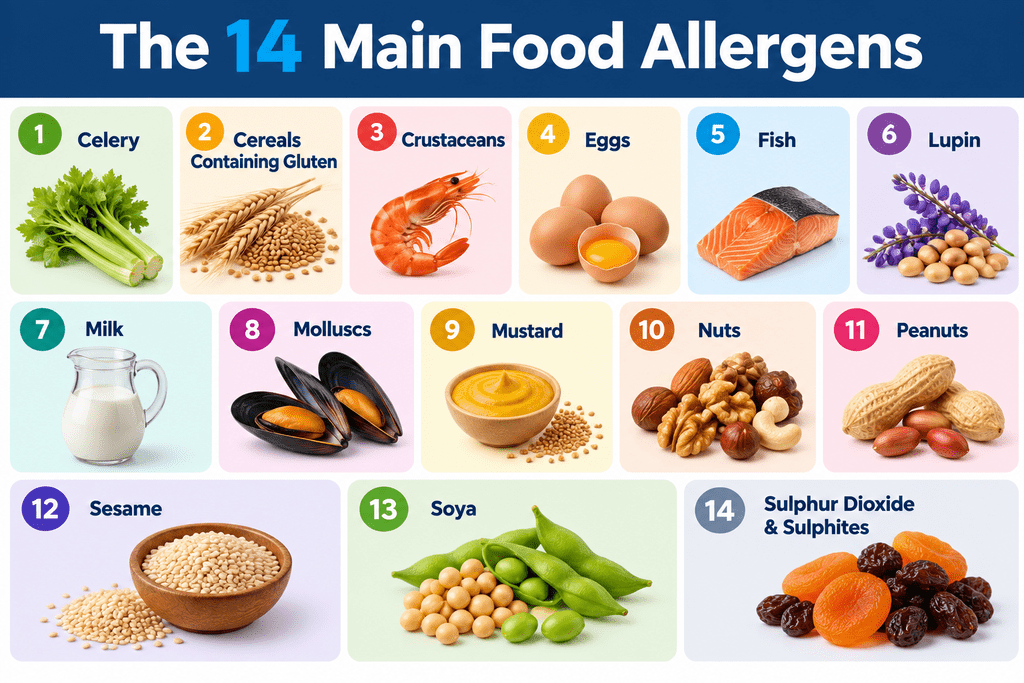
Allergen awareness is non-negotiable for autumn events and school menus where recipe switches are common. Training should ensure people can:
- Identify the 14 allergens and typical hidden sources.
- Prevent cross-contact during storage, prep and service.
- Give accurate, consistent information to customers and pupils.
- Escalate uncertainty, do not guess, and record near misses.
Safeguard E-Learning’s Allergen Awareness course provides practical controls and is approved by CPD, IIRSM, Gatehouse Awards and Institute of Hospitality. The first module is free to try before you roll it out.
Allergen Awareness - Safeguard E-Learning
Allergen Awareness – Food Intolerances, Causes and Symptoms - Safeguard E-Learning
HACCP made simple: hazards, CCPs and monitoring
Hazard Analysis and Critical Control Point (HACCP) is a structured way to control significant food safety hazards.
- Hazards include biological (pathogens), chemical (cleaning residues, allergens) and physical (glass, metal).
- Critical Control Points (CCPs) are the steps where control is essential to prevent, eliminate or reduce a hazard to an acceptable level. Common CCPs include cooking to safe core temperatures, rapid cooling, chilled storage, hot holding and allergen segregation.
- For each CCP, set limits (for example, 75°C for hot cooking as your validated standard), monitor, correct when out of limit, and keep records.
If you need a short, practical introduction, see our Level 2 introduction to HACCP course with free module preview.
HACCP Courses: Introduction to Level 2 & Critical Control Points
Common autumn mistakes to avoid
- Changing recipes without updating allergen matrices or menu boards.
- Borrowing containers that previously held allergens, then reusing without verified cleaning.
- Assuming returning seasonal staff do not need refreshers.
- Recording temperatures late or in batches rather than at point of check.
- Letting personal phones onto prep benches, then missing handwashing steps.
- Relying on one trained supervisor for multiple stalls or satellite kitchens.
Fast onboarding plan for seasonal teams
- Map roles by risk. Assign Level 2 Food Hygiene to anyone handling open food. Schedule Level 3 for supervisors.
- Complete Allergen Awareness for all front-of-house and kitchen staff before service. Reinforce with shift briefings.
- Issue a one-page HACCP summary with your CCPs, limits, who monitors, and what to do if out of spec.
- Run a menu change briefing. Walk through allergen flags, supplier changes and new prep steps.
- Test understanding. Use short quizzes or ask staff to explain an allergen request process back to you.
- Check and log PPE, cleaning chemicals and probe calibration before launch week.
Your EHO-ready evidence pack
Keep it simple and consistent. Your evidence pack for September should include:
- Staff training matrix listing names, roles, courses, completion dates and certificate copies.
- Induction checklist signed off on first shift, including personal hygiene, illness reporting, handwashing, uniform and jewellery.
- HACCP summary and CCP monitoring records for cooking, cooling, storage and hot hold.
- Allergen matrix matched to current menus, with version control and a clear update owner.
- Cleaning schedules and verification logs.
- Probe calibration records and corrective action notes when limits are breached.
Safeguard E-Learning’s online platform records assessments and completions, which you can export to support compliance.
Quick answers to common questions (FAQ)
- Can you get a food hygiene certificate online? Yes. Our food safety training is delivered online via tutor-led video modules with assessments, and certificates are issued on completion.
- How much does a Level 2 Food Hygiene course cost? Prices are shown on the course page and can vary. Please check our Level 2 Food Hygiene online page for current pricing.
- How long does it take to complete Level 2 Food Hygiene? Many learners complete it in a few hours, but timing varies by pace and breaks.
- Is Level 2 Food Hygiene a legal requirement? The law requires appropriate training, not a named certificate. Level 2 is widely accepted as suitable evidence for food handlers.
- How to get a food allergen certificate? Complete an approved online Allergen Awareness course and download your completion certificate.
- What are Critical Control Points in HACCP? The essential steps where control prevents or reduces a significant hazard, such as cooking, cooling and storage.
- What are the 4 Cs of food safety? Cleaning, Cooking, Chilling and Cross-contamination control.
- Do food safety certificates expire? There is no legal expiry, but EHOs often expect refreshers, typically every 2 to 3 years or when roles, menus or processes change.
- Which course is best for food safety? For handlers, Level 2 Food Hygiene is the standard baseline. For supervisors and managers, choose Supervising Food Safety Level 3.
Helpful courses with free module trials
- Explore Level 2 Food Hygiene for handlers with a free first-module preview at our Level 2 Food Hygiene online page.
- For supervisors and chefs, review Supervising Food Safety Level 3 to strengthen HACCP oversight and team briefings.
- Build allergen competence across the team with our food allergy courses and preview the first module free.
- If you want a concise HACCP primer, see our haccp courses page that includes a practical Level 2 introduction and a Critical Control Points focus.
Summary and next steps
Autumn brings change, so tighten your basics. Assign Level 2 to handlers, Level 3 to supervisors, complete Allergen Awareness for everyone facing customers or food, and issue clear HACCP and CCP instructions. Document training and checks so you are EHO-ready on day one. Start now: preview the free first module, enrol your team and have certificates in place before the new term begins.