
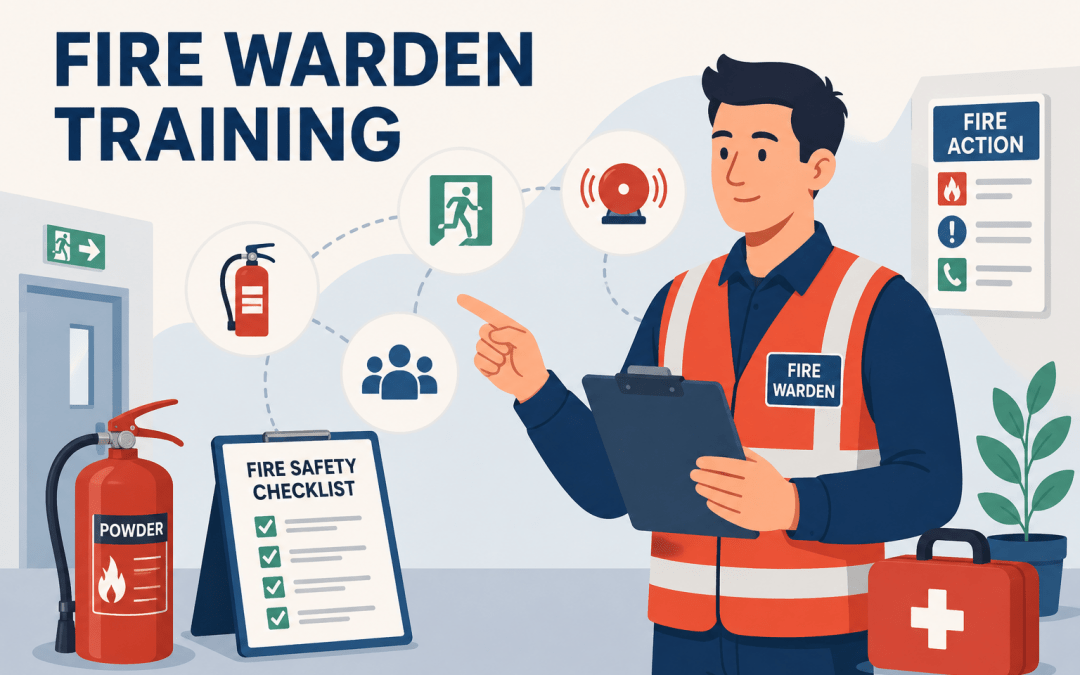
Fire wardens keep everyday risks small and evacuations orderly when they matter most. If you are the Responsible Person under the Regulatory Reform (Fire Safety) Order 2005, or you manage an office or multi‑site operation, you need a clear plan to appoint, train and refresh your wardens before spring drills begin.
This guide walks through what wardens do, how many you need, the training to book, and a quick rollout plan you can start this week. The aim is confidence, not complexity.
Safeguard E‑Learning delivers tutor‑led, video‑based courses with the first module free to preview. Whether you choose online or on‑site, you will find realistic timings and practical content below.
What fire wardens do day to day and in an emergency
A well‑briefed fire warden supports prevention and calm execution during an alarm. Day to day, they:
- Check that escape routes and fire doors are clear and operating.
- Note housekeeping issues like combustibles in stairwells and blocked exits.
- Support local inductions, including alarm tones and routes for new starters and contractors.
During an alarm or drill, they typically:
- Start a systematic sweep of their zone, including toilets, meeting rooms and storage spaces.
- Direct people to the nearest safe exit and prevent re‑entry.
- Support anyone with a Personal Emergency Evacuation Plan (PEEP), coordinating assistance and refuge points.
- Report status, hazards and any persons unaccounted for to the incident controller at the assembly point.
- Help with roll call, liaise with the Responsible Person and, if needed, the Fire and Rescue Service.
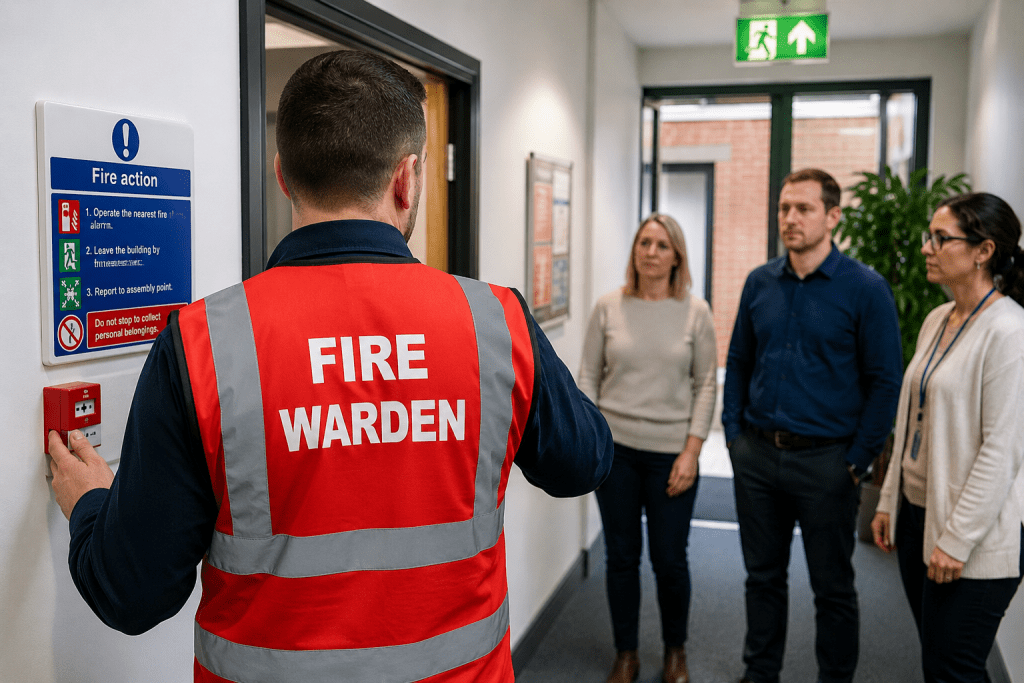
If you need a simple memory aid, the six core responsibilities are: prevention checks, communication, sweep and search, assistance with PEEPs, route management and marshalling at assembly, and reporting back to the controller.
Minimum training, refresher frequency and certificate validity
What training does a fire warden need? In most low to medium‑risk workplaces, a structured Fire Marshal or Fire Warden course covers legal duties, basic fire science, alarm types, extinguishers and evacuation procedures. Wardens should also be briefed on your site‑specific evacuation plan, PEEPs and local hazards identified in your fire risk assessment.
How often should fire wardens be trained? Good practice is every 1 to 3 years depending on risk, turnover and change. Many organisations refresh annually to maintain confidence, especially after layout changes, new alarms or changes to shift patterns. Short micro‑drills and toolbox talks between formal refreshers help keep skills sharp.
Typical certificate validity can vary by provider. Many issue a 12 to 36‑month certificate. Treat this as a planning aid, not the only driver. If your risk profile increases, refresh sooner. Always record training and renewal plans in your compliance matrix.
How long does a fire warden course take? Online tutor‑led courses are commonly 90 minutes to 3 hours. In‑person sessions, including live extinguisher practice, are often half a day. Build time for your local briefing and a walk‑through of routes and refuges.
How many wardens you need by headcount, shift and risk
There is no fixed legal ratio, but sensible planning uses coverage, redundancy and risk:
- Coverage: at least one trained warden per fire zone or floor so every area is swept.
- Redundancy: aim for 2 to 3 wardens per zone to cover leave, sickness and hybrid working.
- Risk: increase numbers where there are higher risks, complex layouts, public access or vulnerable occupants.
A simple starting point for an open‑plan office might be one warden per 20 to 50 people per floor, plus deputies. For multi‑shift sites, ensure each shift has full coverage. Validate your numbers with your fire risk assessment and drill performance.
What a good course should include
Quality content goes beyond a slide deck. Look for:
- The law and roles: Responsible Person duties, warden scope and limits.
- Alarm systems: detector types, sounder patterns, call points and panel indicators.
- Evacuation skills: zone sweeps, roll call methods, assembly point control and liaising with controllers.
- PEEPs: how to plan, assist and use refuges, including communication with those waiting in place.
- Extinguisher basics: fire classes, medium choice and when not to tackle a fire.
- Scenario practice: realistic office and facilities examples to aid recall.
Why tutor‑led video helps retention: concise modules, expert presenters and scenario clips make procedures stick, especially for infrequent events. The ability to pause, replay and rewatch key segments supports shift teams and new starters.
You can preview the first module of our fire warden training free to check fit for your team, then enrol staff who need certification.
Fire Safety Training & Certification: Online Courses & Training
Online vs in‑person: which format fits when
Online works well when you need speed, consistency and flexible access across sites. It is ideal for theory, familiarisation with alarms and evacuation roles, and quick refreshers ahead of drills.
In‑person suits higher‑risk premises, complex buildings or teams that benefit from live walk‑throughs and practical extinguisher use. Many employers blend formats: complete theory online, then run a short site briefing and drill to embed learning.
If you are building a broader programme, browse our fire safety training options to align wardens with general staff awareness and extinguisher skills without overloading calendars.
Quick implementation plan for April fire drills
Week 1:
- Confirm wardens by zone and shift. Nominate deputies.
- Enrol them on a recognised Fire Warden or Fire Marshal course. Use the free first module to brief managers on scope and time.
Week 2:
- Deliver a site briefing that covers your alarm panel, routes, refuges and assembly points. Update or create PEEPs.
- Print sweep checklists and assembly point role cards.
Week 3:
- Run a short tabletop scenario. Practice messages, sweep order and reporting lines.
- Close any housekeeping issues found during walk‑throughs.
Week 4:
- Conduct an announced drill. Time evacuation, check sweep completeness and communications.
- Record findings and set any retraining or layout changes before your unannounced drill later in the quarter.
FAQs
What training does a fire warden need? A structured Fire Warden or Fire Marshal course covering legal duties, alarm systems, evacuation, PEEPs and extinguisher basics, plus a local site briefing linked to your risk assessment.
How often should fire wardens be trained? Typically every 1 to 3 years, with many employers choosing annual refreshers. Re‑train sooner after significant changes or weak drill results.
How long does a fire warden course take? Around 90 minutes to 3 hours online, or about half a day in person with practical elements.
Can fire warden training be done online? Yes. Online tutor‑led video is accepted by many employers for theory. Add a site‑specific briefing and drills for full competence.
What are the six fire warden responsibilities? Prevention checks, staff communication, zone sweep and search, PEEP support, exit and assembly marshalling, and reporting to the incident controller.
Do you get paid more for being a fire warden at work? There is no universal allowance. Some employers offer a small stipend or recognition; many treat it as a nominated duty within normal pay. Check your local policy.
Take the next step
Get your team ready before spring evacuations. Preview the first module of our tutor‑led fire warden training now, then enrol wardens and deputies so you can run confident April drills. To build wider awareness across your workforce, explore our fire safety training catalogue for complementary courses such as Fire Extinguisher and Fire Safety in the Workplace.
Helpful links:
Explore our Fire Marshal course and preview the first module:
Fire Marshal Training and Fire Warden Training Online Course
Browse all fire safety training courses to round out your programme:
Fire Safety Training & Certification: Online Courses & Training
If you need extinguisher fundamentals alongside warden duties, see our dedicated Fire Extinguisher training:
Fire Extinguisher Training Online | Fire & Health and Safety Courses
For general awareness across your office, review Fire Safety in the Workplace:
Basic Fire Safety Awareness for Care Homes – E-Learning – On-Line Fire and Health & Safety Courses
If you would like guidance on numbers, shift coverage or a blended rollout, contact Safeguard E‑Learning on 0333 366 1015 or info@safeguardconsultancy.co.uk. We are here to help you get compliant, fast and with confidence.
Organisations that require additional support beyond e-learning may also benefit from professional fire risk assessments, fire door inspections and consultancy services provided by Safeguard Fire Consultancy.
Safeguard Consultancy – Fire Risk & Passive Fire Consultancy